
Living in the mountains changes the purpose of training.
Why I Started Training (Personal Note)
I originally started weight training for a very simple reason: I wanted to make sure I could always carry my daughter upstairs to bed. At the time, it had nothing to do with aesthetics, numbers, or performance. It was about capability. About being strong enough for the moments in life that actually matter. Somewhere along the way, that purpose expanded. Training began improving everything else too. My energy became steadier. My recovery improved. Ski days felt stronger and more controlled. Long mountain days became easier on my body. Even daily life started to feel lighter, more resilient, and more grounded. What began as a quiet commitment to motherhood evolved into a deeper understanding that strength training is really about preserving your ability to fully participate in your own life. In mountain towns like Park City, where movement is woven into everyday living, that kind of strength becomes more than fitness. It becomes freedom, longevity, and the ability to continue showing up for the people and experiences you love most.
Here strength is not purely aesthetic or performance-based. It becomes integrated into lifestyle itself. Walking through snow-covered neighborhoods, hiking uneven trails, skiing variable terrain, biking long elevation climbs, and simply maintaining durability through changing seasons all place constant demand on the body’s posterior chain.
The posterior chain includes the hamstrings, glutes, spinal stabilizers, calves, and surrounding connective tissues responsible for propulsion, balance, force absorption, and hip stability. In mountain environments, these muscles quietly determine how well the body handles both explosive movement and repetitive stress.
For many people living in Utah’s mountain regions, especially active adults, skiers, snowboarders, hikers, and endurance athletes, posterior chain training becomes one of the most important long-term investments for mobility and joint longevity.
The strongest mountain athletes are rarely just quad-dominant. They move well because the backside of the body is developed enough to stabilize the hips, protect the knees, and create efficient force transfer through difficult terrain.
Mountain Strength Workout (Full Lower Body Focus) posted at the bottom of this page.
Why Hamstring Strength Matters More in Mountain Environments
Mountain living creates constant instability.
Even outside formal athletics, daily movement patterns often involve:
- uneven surfaces
- elevation changes
- snow and ice variability
- rotational movement
- eccentric deceleration
- prolonged hiking or skiing demands
- lower back loading from outdoor activity
Weak hamstrings and glutes force the knees and lower back to absorb more stress than they were designed for. Over time, this can contribute to instability, compensation patterns, and reduced movement efficiency.
Strong posterior chain development helps support:
- knee integrity during skiing and hiking
- hip stability during rotational movement
- lower back protection
- improved posture
- better balance on uneven terrain
- reduced fatigue during long activity days
- stronger power output for skiing, biking, and trail movement
This becomes especially important in ski towns where recreation is not occasional. In Park City, movement is often part of daily life year-round.
The Shift Away From Purely Heavy Bilateral Training
Traditional strength programs often prioritize symmetrical bilateral lifts exclusively. While those movements still matter, mountain athletes increasingly benefit from unilateral and staggered stance patterns that better reflect real-world movement.
Skiing is asymmetrical. Hiking is asymmetrical. Trail movement is asymmetrical. Life on uneven terrain is asymmetrical.
Training should partially reflect that reality.
This is why exercises like B-stance Romanian deadlifts have become increasingly valuable for mountain athletes and functional strength programming.
B-Stance Romanian Deadlifts
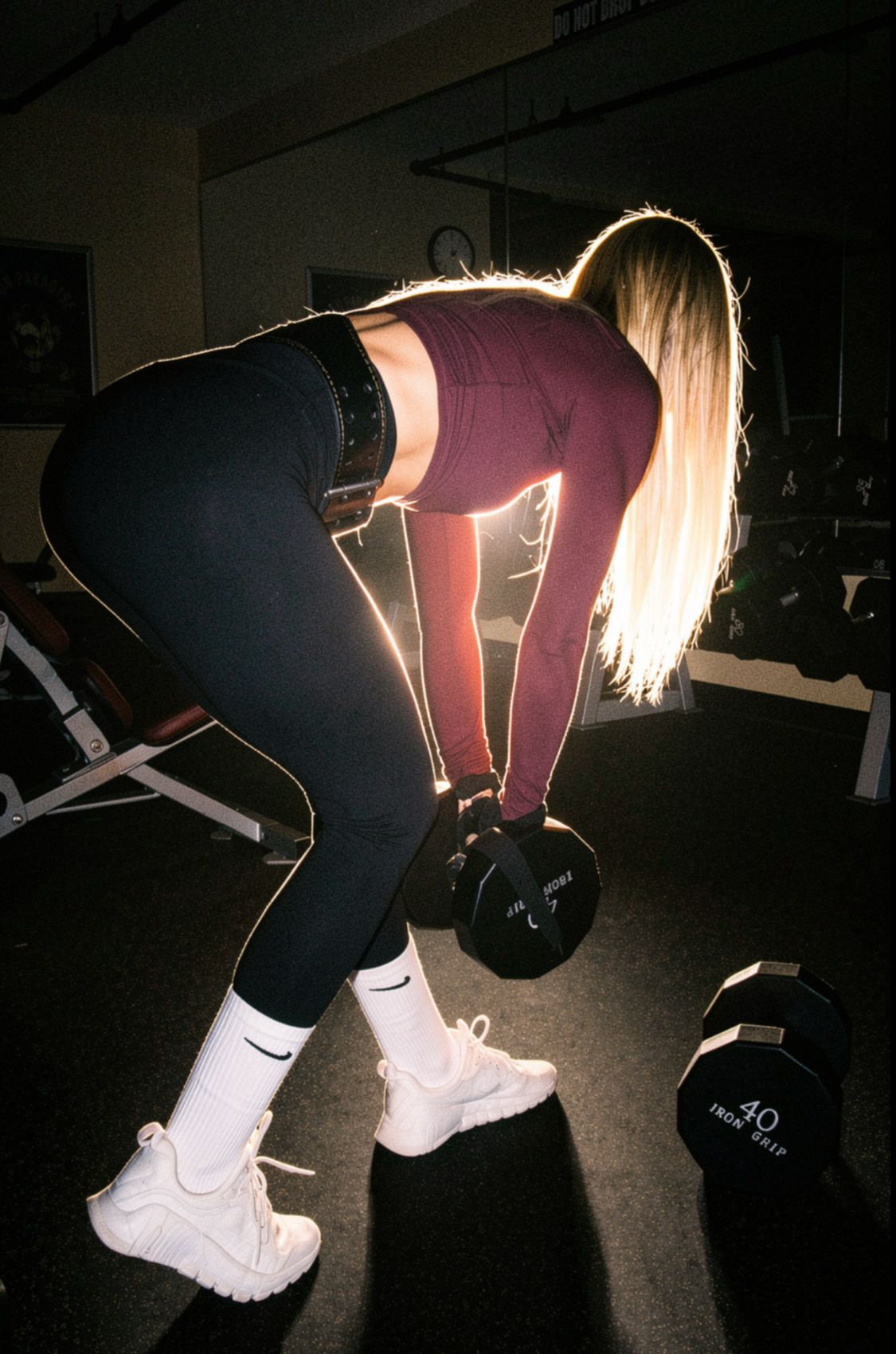
This version is the "simplist" form and the one I prefer for balance, alignment, and my personal body demands. You can increase difficulty and results with alternate stance forms.
The B-stance RDL blends unilateral stability with bilateral loading.
Instead of fully splitting into a single-leg deadlift, the rear foot acts as a kickstand for balance while the lead leg absorbs most of the tension and force production.
This movement is extremely effective for:
- hamstring isolation
- hip stability
- glute activation
- pelvic control
- ski-specific balance development
- correcting side-to-side imbalances
For mountain athletes, this exercise teaches the body to stabilize under load while maintaining proper hip mechanics.
One of the biggest advantages of B-stance RDLs is that they develop strength without requiring maximal spinal loading. That matters for athletes already accumulating stress through skiing, hiking, biking, or outdoor recreation.
Execution matters more than weight.
The focus should remain on:
- slow eccentric control
- maintaining a neutral spine
- hip hinge mechanics
- feeling the stretch through the hamstrings
- controlled balance rather than speed
Smith Machine Deadlifts
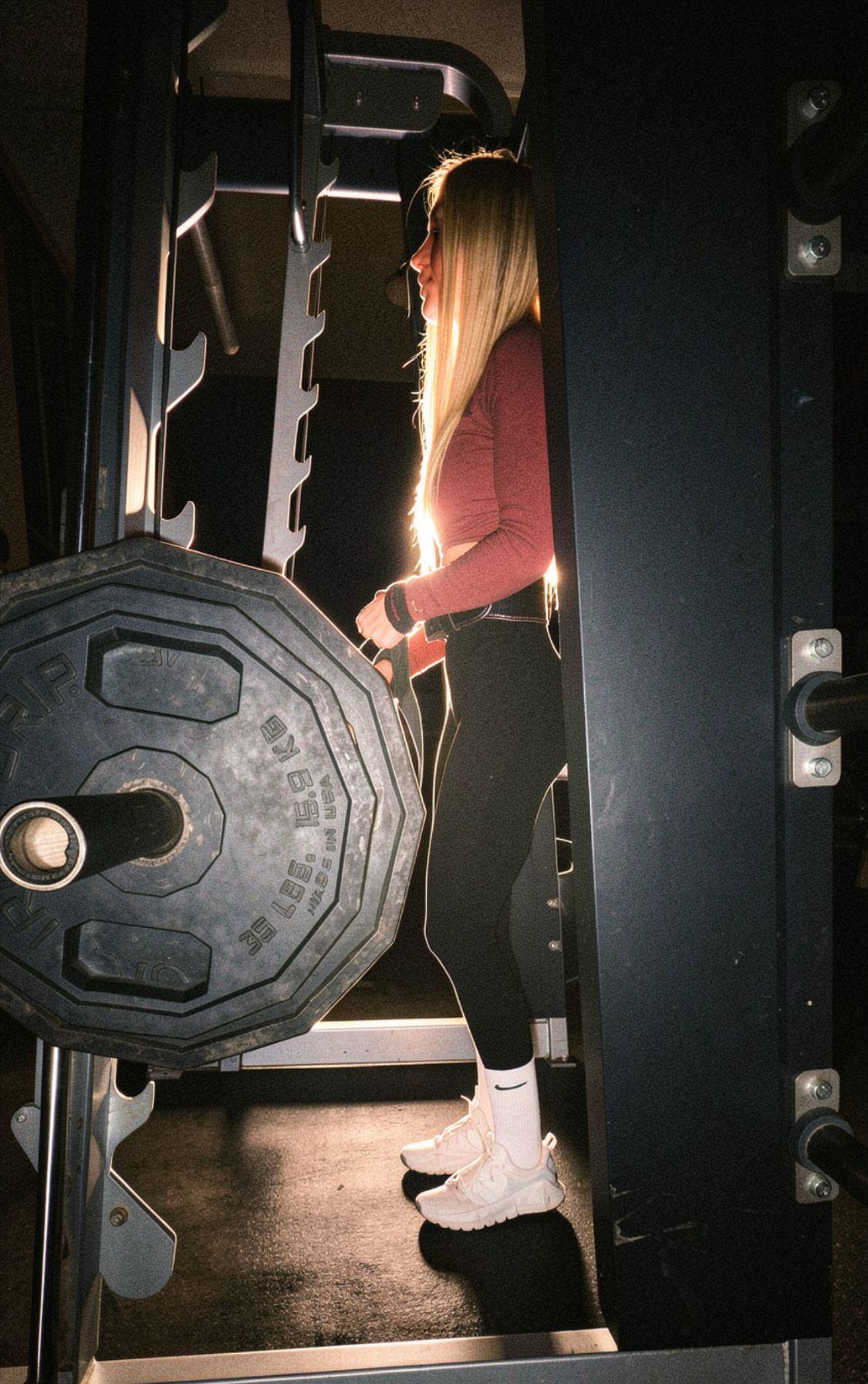
- attmepted this weight & was humbled -
Smith machine deadlifts are often misunderstood in traditional strength culture, but they can be extremely useful when programmed intentionally.
For many active adults and mountain athletes, the Smith machine offers:
- greater positional control
- reduced stabilization fatigue
- safer loading during high-volume training
- improved ability to focus on hamstring tension
- lower nervous system fatigue compared to maximal free-weight pulling
In mountain communities where people are frequently layering recreational stress on top of gym training, recovery efficiency matters.
Not every workout needs to maximize neurological demand.
Smith machine deadlifts allow athletes to train the hinge pattern while reducing some of the systemic fatigue that heavy conventional pulling can create.
This can be especially beneficial during ski season when the body is already experiencing significant eccentric loading from repetitive downhill movement.
The movement becomes less about ego lifting and more about controlled tissue loading.
For functional posterior chain development, the goal is not simply moving the most weight possible. The goal is maintaining resilient tissue quality, stable movement patterns, and sustainable strength over decades.
Leg Press Training for Mountain Athletes
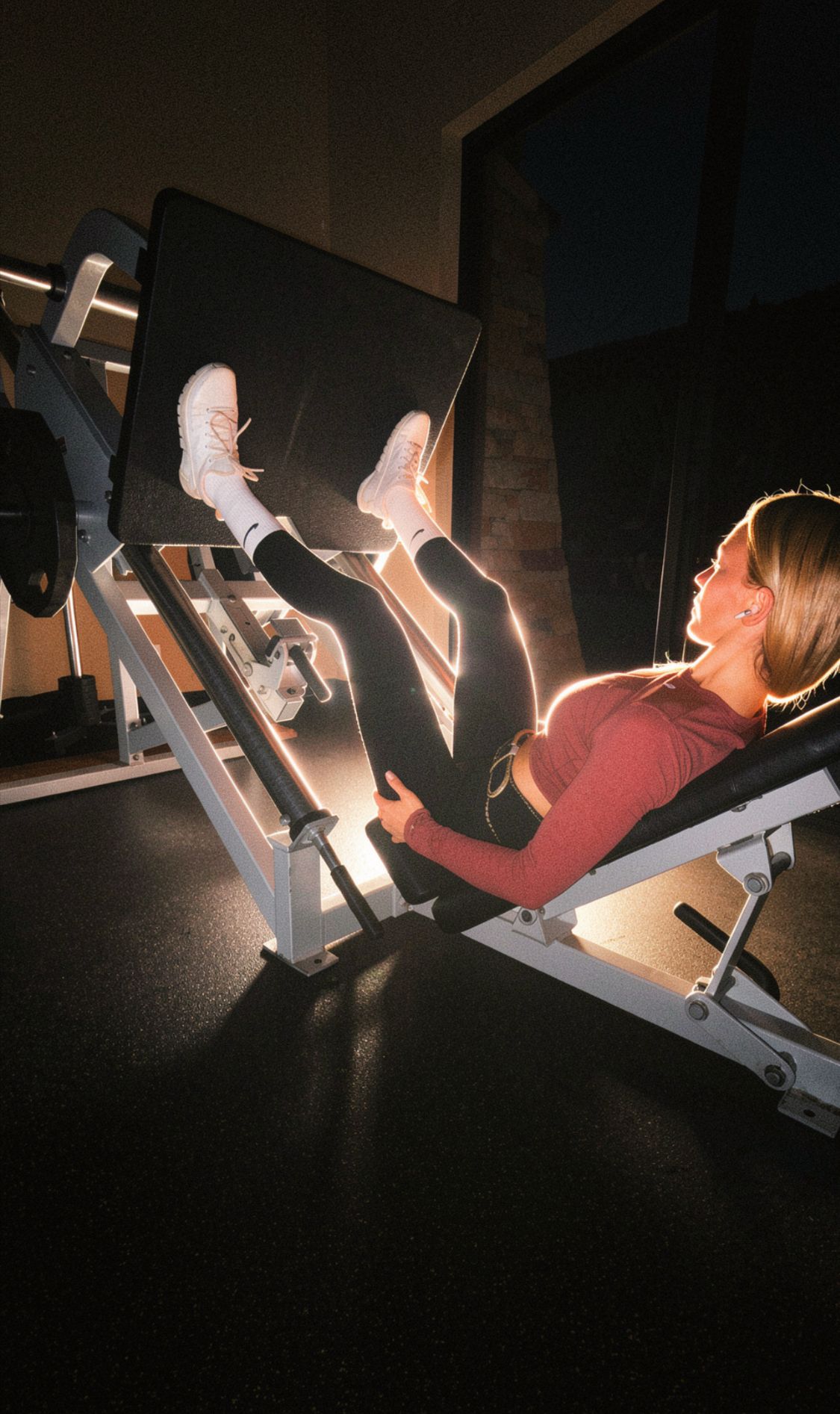
The leg press remains one of the most effective lower-body strength tools when used intentionally. You can opt for this version pictured above where the weight is working against gravity or you can us the seated leg press machine for an easier stack.
While it is sometimes dismissed in performance-focused training conversations, the movement offers several advantages for mountain athletes and active adults living in high-output environments like Park City.
The leg press allows athletes to:
- build lower-body strength with controlled spinal loading
- accumulate volume safely
- strengthen the quads, glutes, and hamstrings simultaneously
- improve muscular endurance for skiing and hiking
- train through winter seasons with lower systemic fatigue
For mountain living, the value of the leg press is not simply maximal strength.
It is controlled force production.
During skiing, hiking descents, biking, and trail movement, the lower body constantly absorbs force while maintaining stability through changing terrain. The leg press can help condition the legs to tolerate prolonged muscular demand without excessively stressing the lower back.
Foot placement also changes muscular emphasis.
A higher foot placement generally increases posterior chain involvement through the glutes and hamstrings, while a lower placement tends to emphasize the quadriceps more heavily.
For mountain athletes, a balanced approach often works best.
Controlled tempo matters significantly more than simply adding weight.
Slow eccentric lowering phases, full range of motion within mobility limits, and consistent tension throughout the movement typically create better long-term outcomes than aggressive ego lifting.
The leg press also becomes highly valuable during ski season when athletes want to maintain strength while reducing overall recovery demand.
Not every training session needs maximal axial loading.
Sometimes the smartest programming choice is the one that allows consistency, recovery, and sustainable performance.
Seated Hamstring Curls
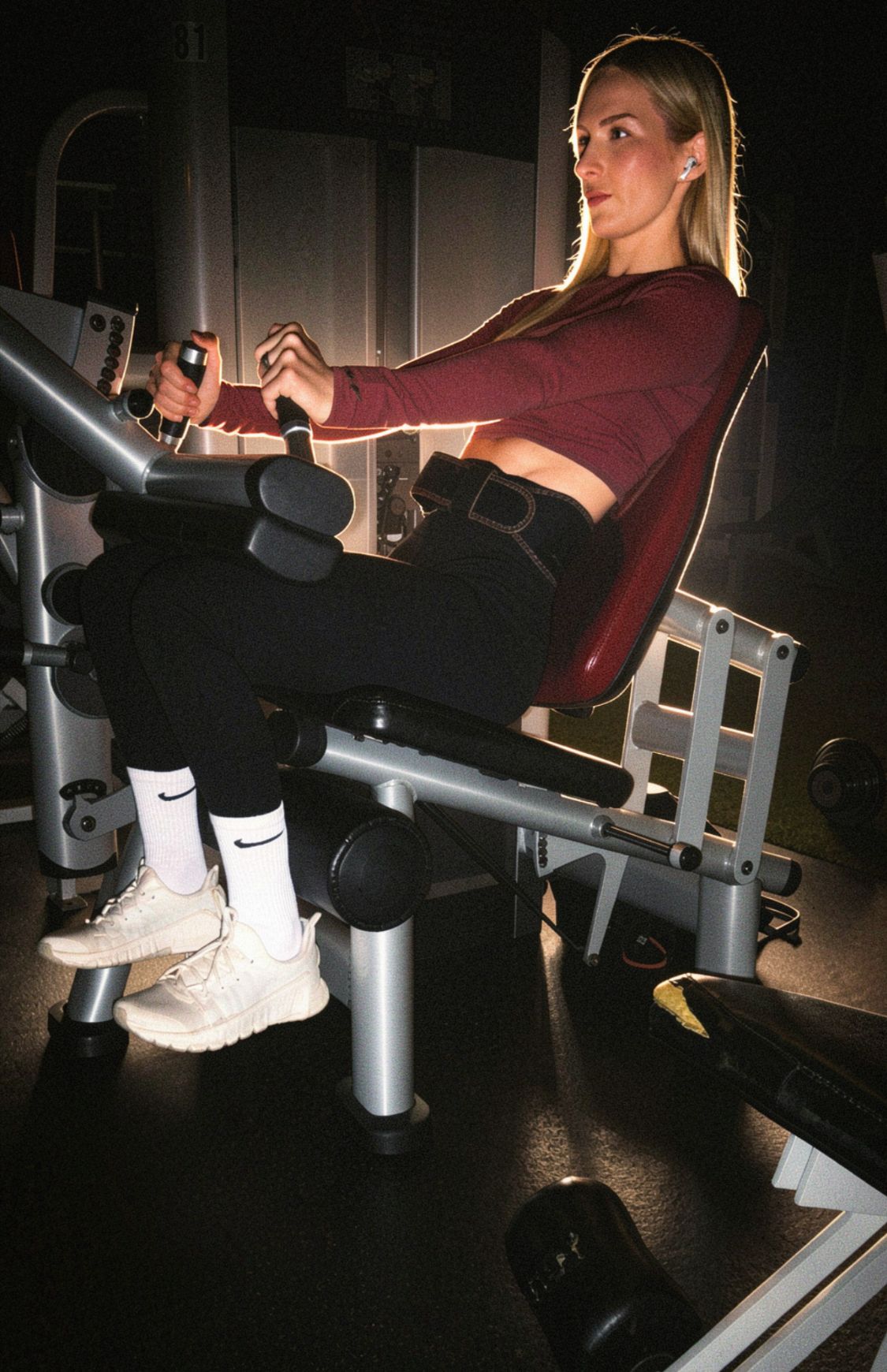
Isolation work is often undervalued in functional training conversations.
In reality, isolated hamstring strengthening becomes increasingly important for joint protection and injury prevention, particularly in mountain environments.
The seated hamstring curl provides direct flexion-based loading to the hamstrings while placing the hips in a flexed position. This creates a deeper stretch and often a stronger contraction through the lengthened portion of the muscle. A recent tip I learned that I will be implementing moving forward is this: lean forward on the machine, angling your torso towards the hand grips for an extended stretch in the hammies.
Benefits include:
- direct hamstring hypertrophy
- tendon strengthening
- knee stabilization
- improved muscular endurance
- reduced risk of hamstring strain
- support for deceleration mechanics during skiing
Mountain athletes frequently focus heavily on compound movement while neglecting tissue-specific strengthening.
That imbalance can eventually appear during long ski seasons when fatigue accumulates and connective tissue becomes stressed.
Well-programmed isolation work helps create durability.
It is not less functional. It is foundational.
The Importance of Eccentric Strength for Skiing and Mountain Life
One of the defining characteristics of mountain sports is eccentric demand.
Eccentric contractions occur when muscles lengthen under tension. This is heavily involved in:
- downhill skiing
- trail descents
- hiking declines
- deceleration
- landing mechanics
- absorbing uneven terrain
Hamstrings play a major role in controlling these movements.
Without adequate eccentric strength, the knees and lower back often compensate.
This is why slower lowering phases during RDLs and deadlift variations are so important. Controlled eccentrics build resilience in both muscle tissue and connective structures.
Injury prevention in mountain environments is often less about avoiding movement and more about improving tissue tolerance.
Recovery Matters in Mountain Training
One of the biggest mistakes active mountain residents make is combining high recreational output with excessive gym intensity.
In Park City and surrounding Utah mountain communities, many people ski multiple days per week while simultaneously training hard in the gym.
The body still has finite recovery resources.
The most effective mountain training programs account for:
- seasonal activity fluctuations
- nervous system fatigue
- connective tissue recovery
- sleep quality
- mobility maintenance
- hydration at elevation
- caloric demands during winter activity
This is where more controlled posterior chain work often outperforms excessively aggressive programming.
Sustainable training creates longer athletic lifespans.
Structuring a Simple Posterior Chain Session
A highly effective mountain-focused posterior chain session does not need to be complicated.
A DIY structured workout might include the following:
- B-stance RDLs for unilateral stability and hamstring loading
- Smith machine deadlifts for controlled compound hinging
- Seated hamstring curls for direct isolation and tendon support
- Core stabilization work
- Mobility and recovery work
The focus should remain on movement quality, consistency, and long-term durability.
The goal is not simply soreness. The goal is capacity.
Mountain Living Requires a Different Definition of Fitness
Fitness culture often emphasizes aesthetics, intensity, or short-term transformation.
Mountain living tends to reward something different.
The strongest people in ski towns are often the ones who can continue moving well year after year without chronic breakdown.
They recover efficiently. They maintain mobility. They train intelligently. They build resilient tissue instead of constantly chasing exhaustion.
Posterior chain training supports that entire structure.
For people living active lifestyles in and around Park City, strong hamstrings and glutes are not secondary muscles. They are foundational systems that support skiing, hiking, trail movement, longevity, posture, and overall quality of life.
When training is approached with long-term perspective, exercises like B-stance RDLs, Smith machine deadlifts, and seated hamstring curls stop being isolated gym movements.
They become preparation for mountain living itself.
I’ve been stepping more intentionally into sharing both fitness and real estate content, and if I’m honest, it’s been a learning curve.
Not just in front of the camera, but in allowing myself to be seen while I grow.
Some days it feels natural. Other days it feels like I’m figuring it out in real time, piece by piece. But I’m learning that growth is not supposed to feel polished. It is supposed to feel lived in.
Fitness has been a grounding force for me and many of my clients, close friends, and family. Real estate has been a lifelong passion. And lately, I’ve felt called to bring both into the same space more openly, even if it is imperfect along the way.
There is a lot I am still learning but I want to share the process, not just the outcome. The training days, the mountain lifestyle, the market shifts, the conversations, and everything in between.
If you are here for it, I appreciate you being part of the journey. I hope you stay around as it continues to evolve.
Mountain Strength Workout
(Full Lower Body Focus)
This session blends hinge strength, unilateral stability, and controlled hypertrophy for skiing, hiking, and long-term joint resilience.
B-Stance Romanian Deadlift
- 3–4 sets
- 8–10 reps per side
- Tempo: 3 seconds down, 1 second pause, controlled up
Focus on slow eccentric loading through the hamstrings and keeping hips square. This is your primary control movement.
Smith Machine Deadlift
- 3–4 sets
- 6–8 reps
- Tempo: steady lowering, no bounce
Keep this moderate-heavy, but not maximal. Think tissue loading and repeatable strength, not failure.
Leg Press
- 3 sets
- 10–12 reps
- Tempo: 3 seconds down, controlled press up
Foot placement can vary slightly:
- Mid stance = balanced quad + glute
- Higher stance = more posterior chain emphasis
Stay controlled through full range without locking out aggressively.
Seated Hamstring Curl
- 3 sets
- 10–15 reps
- 1–2 second squeeze at peak contraction
This is your direct hamstring development and knee protection work. Do not rush this.
Bulgarian Split Squat (or Step-Ups)
- 2–3 sets
- 8–10 reps per leg
Slow descent, stable knee tracking, full foot pressure. This builds mountain stability and balance under load.
Core Stability Finisher (Pallof Press or Dead Bug)
- 3 sets
- 10–12 reps per side (or controlled timed holds)
Focus on anti-rotation and spinal control under fatigue
Elevated Living. Intelligent Movement. Mountain Strength Built for Longevity.
FROM OUR BLOG

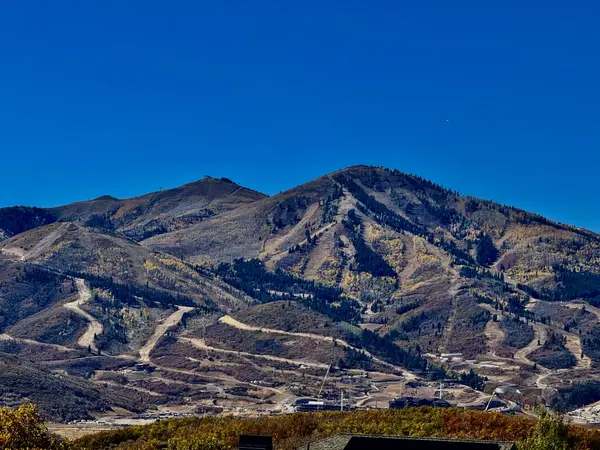
Park City Housing Supply: A Data-Driven Look at Inventory, Demand & Absorption Trends
Understanding Inventory, Demand & Absorption Rates in Park City Real Estate In a market as distinctive as Park City, Utah, housing supply is never simply a matter of how many listings appear online. The numbers visible on a search portal represent only part of the story. Beneath those figures lies a
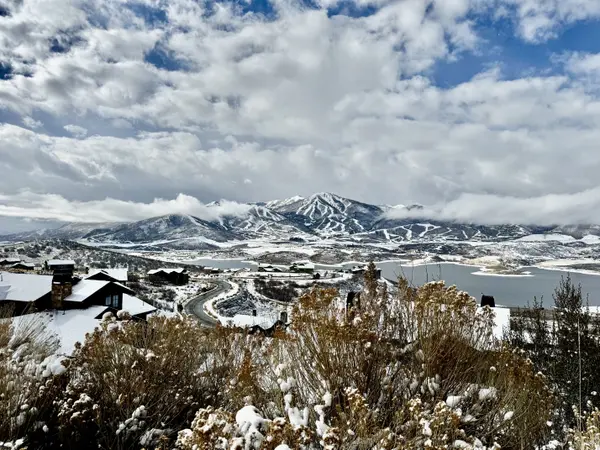
Hideout, Utah: The Wasatch Back's Emerging Luxury Market
A Market Once Overlooked Is Now Commanding Attention For much of its history, Hideout existed quietly on the edge of Park City's real estate conversation. Today, that narrative has changed dramatically. Perched above the eastern shoreline of Jordanelle Reservoir, Hideout has emerged as one of the Wa

Remembering September 11: Park City Reflects and Remembers
Every September 11, communities across the country pause to remember. We remember the lives lost. We remember the first responders who ran toward danger. We remember the families whose lives changed forever. And we remember the remarkable sense of compassion and unity that emerged in the days that f